Cable Management System for DC Charging Stations
Enhance your EV charging stations with the BESSUN Cable Management System
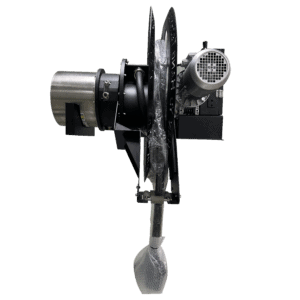
This swivel arm balancer, is a Cable Management System keeps DC charging cables off the ground, reducing touchpoints on the charging equipment and delivering a more consumer-friendly charging experience. It improves safety, keeps cables organized, and helps extend the lifespan of both the cable and the charging connector.
- Better cable organization – Keeps DC charging cables neat, tangle-free, and off the ground.
- Protects ports & cables – Reduces strain, bending, and twisting on the charging cable and charging connector, extending service life.
- Safer, easier charging – Fewer touchpoints and no charging cables dragging on the ground create a more comfortable and safer user experience.
Technical Data
Material: Cast aluminum alloy with surface coating
Net Weight: approx. 4.6 kg
Working load: 30 kg
Max load: 80 kg @600mm
Main Arm Length: from 200 mm to 1000 mm; Standard length: 600mm
Sub-Arm Length: 300 mm
Main Arm Preload Setting: Adjustable from 5N to 25N
Service Life: Reciprocating cycles ≥ 100,000 times
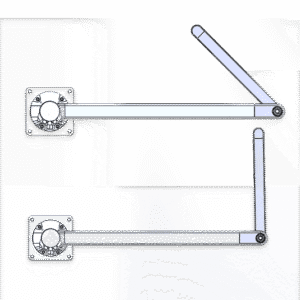
Rotation Angel: main arm 180°; sub-arm: 90°,135°

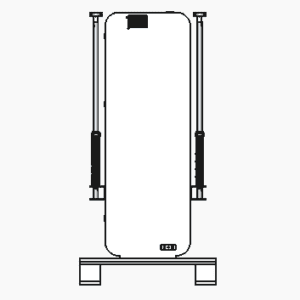
Technical Drawing

BSM-SA1-6030-18090-L
Need 3D drawings and Product Specification? Contact us at info@bes-sun.com — we are happy to provide!
Buffer


The shock absorption module (buffer) dampens the cable retraction force, ensuring smoother and more controlled movement. It effectively reduces recoil impact, particularly when the swivel arm balancer is installed at an angle.
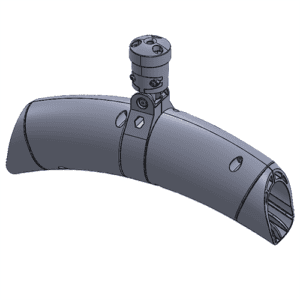
EV Charger Cable Clamp / Cable Holder


Normal Type
Quick Connection Type
Quick Installation Demo – How to Install the Cable Clamp on the Swivel Arm Balancer
This video demonstrates how to quickly install cable clamps onto the swivel arm balancer — part of an efficient cable management system for EV charging stations. With the pre-installed quick connector and separately packed cable clamp, the setup process is fast and user-friendly.
Why it is better:
1) Quick clamp installation and disassembly – save time on setup and maintenance
2) Simple step-by-step process
3) Ideal for EV cable management
How to Install the Rope on a Swivel Arm Balancer
The rope can be easily replaced or upgraded to a longer length by the user.
Steps:
Use a screwdriver to remove the cap.
Pass the rope through the washer, then tie a knot. For better stability, it’s recommended to secure the knot with glue.
Leave approximately 15 cm of rope length.
Quality Test

Proven Application Use Cases
Premium Custom Covers for EV Charging Stations | Beyond Standard Design
We go beyond standard solutions. We can design and manufacture custom housing covers tailored specifically to your charging station’s aesthetic and branding requirements, ensuring a seamless, high-end look that perfectly aligns with your corporate identity.
Optimize Your EV Charging Station with the Correct Cable Management System
Choosing the right EV charger cable management system is essential for the longevity, safety, and user-friendliness of your DC charging stations. To ensure we provide the best possible solution, we require the following information:
- Cable Length
- Cable Diameter
- Total Cable Weight
By providing these details, we can conduct a thorough evaluation and recommend a system that meets your specific requirements, enhancing the efficiency and durability of your charging infrastructure.
Challenges in EV Truck Charging
Charging electric trucks presents unique challenges due to their size and power requirements:
- Cable Weight and Length
Electric trucks require longer and thicker cables to support high power levels (often 200–500 A). These EV charging cables are heavy and difficult to maneuver, putting strain on users and vehicle charge ports. - Safety Hazards
Unmanaged cables can pose trip risks and be damaged by vehicles driving over them—leading to service interruptions and costly replacements. - Cable Theft and Vandalism
High-value copper inside charging cables makes them a target for theft, especially in unmonitored locations.
Cable Management Solutions for EV Truck Charging
To overcome these challenges, commercial and fleet charging setups often adopt cable management systems, such as:
- Cable Retractor – These keep cables off the ground and reduce clutter but are more common in small DC charging stations.
- Overhead Track or Boom Arms – Especially effective for fleets, these guide cables from above or the side and improve maneuverability.
- Door-Closer Style Cable Management System – The cable is guided by a mechanism hidden inside the charger housing
BESSUN Cable Management System(Swivel Arm Balancer)
The Cable Management System(Swivel Arm Balancer) from BESSUN is purpose-built for heavy-duty EV charging environments such as truck depots, public DC fast-charging stations, and logistics hubs.
Key Product Features:
- Wide Rotation Radius – The swivel arm balancer offers a 180° horizontal swivel, ensuring easy access to either side of large vehicles like trucks or buses.
- Heavy-Duty Construction – Built with industrial-grade materials to endure outdoor conditions and support thick, heavy DC charging cables. Working load: 30 kg; Maximum load: 80 kg@600mm.
- Cable Load Relief – Elevates the cable to eliminate stress on the charging port and connector, reducing wear and tear.
- Operator-Friendly – Enhances usability with ergonomic handling—ideal for repetitive use in fleet operations.
- Customizable Length – Tailored to site-specific requirements, supporting a wide range of commercial configurations.
Why Cable Management System Matters for EV Charging Stations?
DC fast charging cables are heavier and more expensive than AC charging cables. Without proper cable management system, they drag on the ground, twist, and get run over, creating trip hazards and accelerating wear on the cable and connector. A cable management system keeps charging cables suspended and guided during use, protecting the investment in high-value DC charging cables and delivering a cleaner, more professional charging experience.
Benefits for Charge Point Operators and Installers
Integrating the BESSUN Cable Management System brings clear operational benefits:
- Lower maintenance costs – Longer cable and connector service life.
- Safer, easier charging – Fewer trip hazards and a more intuitive user experience.
- Professional site appearance – Neat cable routing improves customer perception.
- Simplified layout planning – Defined working radius supports better station design.
Typical Applications
The Cable Management System is suitable for a wide range of DC charging projects, including:
- Public DC fast charging stations
- Highway service areas and rest stops
- Fleet and depot charging (logistics, buses, company fleets)
- Commercial and industrial sites offering DC fast charging
Wherever heavy DC charging cables are used frequently, the BESSUN Cable Management System helps keep the site safer, cleaner, and easier to operate.
Now See It in Action
A demonstration video shows the BESSUN Swivel Arm Balancer(Cable Management System) in a real truck charging environment, highlighting its performance. This visual will clearly illustrate how the product solves common issues in EV truck cable management.
Want to learn more about EV Charger cable management system?
Check out the Design Recommendations for Accessible Electric Vehicle Charging Stations by the U.S. Access Board for expert guidance on creating inclusive and accessible charging solutions.
Explore Cable Management Systems for Retrofitting DC Fast Chargers.
FAQ
What is the working load?
Please see table below.
Model | Working Load |
BSM-SA1 | 30 kg |
BSM-SA2 | 15 kg |
BSM-SA3 | 30 kg |
BSM-SA4 | 30 kg |
Can the 30 kg working load cover most EV charging cables?
Yes. For typical CCS1/CCS2 charging cable of 7 m length and 43 mm diameter, including the plug, the total weight is ~13.5–16 kg. Therefore, the 30 kg working load is sufficient with a safe margin.
What is your maximum load? What does “Max. load @ 600 mm” mean?
Please see table below. Take 100kg@600mm for example, it means the product can handle up to 100 kg at a 600 mm reach, including occasional pulling or impacts. It is not for long-term use,.
Model | Max. Load |
BSM-SA1 | 80 kg@600mm |
BSM-SA2 | 30 kg@600mm |
BSM-SA3 | 100 kg@600mm |
BSM-SA4 | 80 kg@600mm |
Does the swivel arm balancer meet corrosion resistance requirements?
Q: What corrosion resistance tests have been performed?
A: Tested in a neutral salt spray (NSS) chamber.
Q: What is the minimum requirement?
A: 240 hours salt spray exposure without red rust.
Q: What is the actual test result?
A: 720 hours NSS, no red rust.
What endurance tests have been done on the cable management system?
1)Endurance at room temperature
Q: What is the endurance test at room temperature?
A: While the design requirement is 50,000 cycles, our internal testing confirms stable operation for up to 100,000 cycles under 30 kg load.
2)Endurance at +50 °C@90% relative humidity
Q: What test has been performed?
A: Static load test
- +50 °C, 24 hours, 80 kg@600mm, no breakage.
Q: Does this fulfill the 50,000-cycle requirement at +50 °C@90% RH?
A: No, only static testing has been done; cycling test not yet performed.
Q: Can you perform the 50,000-cycle test at +50 °C@90% RH?
A: Currently not, as a very large climatic chamber is required.
We kindly ask if this test can be carried out in your test laboratory.
3)Endurance at -40 °C
Q: What test has been performed?
A: Static load test at:
- -40 °C, 24 hours, 80 kg@600mm, no breakage.
Q: Does this fulfill the 50,000-cycle requirement at -40 °C?
A: No, only static testing has been done; cycling test not yet performed.
Q: Can you perform the 50,000-cycle test at -40 °C?
A: We currently cannot perform this cycling test.
We kindly ask if this endurance test can be carried out in your test laboratory.
What is your MOQ?
No MOQ. The sample lead time is 10 ~ 12 days.
What information should I provide when sending an inquiry?
To ensure we provide the best possible solution, it would be great to receive the following information:
- Cable Length
- Cable Diameter
- Total Cable Weight
What is the different between BSM-SA1 and BSM-SA3? It looks the same.
The main different points are as below:
- the max. load of BSM-SA1 is 80 kg@600mm, while BSM-SA3 is 100kg@600mm.
- the profile of BSM-SA1 is 60×40 mm, while BSM-SA3 is 80x40mm. BMS-SA3 is more suitable for big size DC charging stations. BSM-SA3 features a more robust appearance that is better suited for larger charging stations, for example, charging stations with a length ≥ 800 mm.
Can I have a custom length and/or colour?
Yes, we support custom lengths and colors. Custom orders typically take 20–25 days to produce. However, for testing purposes, we recommend using our in-stock samples if available, as this can save both time and cost.
Can we have a housing as a compelete set?
Yes, we can design and produce a housing for you based on your EV charging station specifications. However, given the shipping costs, we would suggest that you manufacture it locally (at your end).
Can I only order the cable clamps?
Yes. Please let us know the diameter of your charging cable.
Why Choose a Swivel Arm Balancer over Door-Closer Style Cable Management Systems?
Many premium DC chargers on the market use a door-closer style cable management system, where the cable is guided by a mechanism hidden inside the charger housing. While this solution can look integrated, it also adds design complexity and cost, and is often tied to a specific charger model.
A swivel arm balancer Cable Management System, like the one from BESSUN, offers a more flexible and cost-effective alternative that can be applied to most DC charging stations, including pedestal, wall-mounted, and dispenser-type chargers.
Advantages of Swivel Arm Balancer vs Door-Closer Style Cable Management System
Compared with cable management systems based on door-closer mechanisms inside the charger housing, a swivel arm balancer offers several practical and technical advantages:
- Wider compatibility
Swivel arm balancers can be mounted on DC chargers, without depending on a specific cabinet design. This makes them suitable for both new projects and retrofit upgrades, across different charger brands. - More cost-effective
The structure is simpler and does not require a custom internal mechanism inside the charger. This helps reduce hardware cost and integration cost, which is especially important for large rollouts and multi-site projects. - Easy maintenance
All key components (swivel arm balancer, cable clamp/holder) are accessible from the outside. Technicians can inspect, adjust, or replace parts quickly without opening the charger or affecting its IP rating. - Better charging cable handling
The arm and balancer is designed to support the weight and stiffness of DC charging cables, keeping them off the ground while controlling bending radius and torsion. This helps protect the charging cable and charging connector, extending service life. - Consistent, user-friendly operation
Drivers simply pull the charging cable along the direction of the swivel arm balancer. The movement feels intuitive and keeps the cable path clear, improving safety and overall charging experience.
Is a Buffer Essential for a Swivel Arm Balancer?
A buffer isn’t absolutely essential for a swivel arm balancer, but it’s highly recommended. However, using one helps reduce wear on the retractor mechanism and minimizes the risk of damage to the charging station over time.
Could you please share the advantages and disadvantages of hard and soft connections?
Soft connection: Absorbs and accommodates pulling forces, helping reduce shock loads, but may allow more sway or movement at the cable end.
Hard connection: Provides better positional control and minimizes sway, but transmits pulling forces more directly through the arm and connection point.